
Vacancy Is an Operating Condition
Housing authorities manage vacancy in a public setting. Residents, neighbors, contractors, inspectors and agency teams may all be affected by how a unit or building is secured. Large modernization efforts also create phased conditions in which some areas are active while others are offline. A suitable plan must separate those conditions clearly and support public procurement requirements.
Where DAWGS Fits
Authorities need an accurate opening count, a safe installation scope, controlled re-entry and records that can support inspections and contract administration. Local housing, fire and building requirements still apply. DAWGS’ role is to recommend and provide physical steel protection; the authority retains responsibility for program rules, resident safety and final approvals.
Turnover / Between Occupants
Units held between occupants or renovation phases.
Modernization / Redevelopment
Buildings included in modernization or redevelopment.
Disposition / Demolition / Transfer
Properties awaiting disposition, demolition or transfer.
Temporary Facility Closure
Community facilities temporarily taken out of service.
A Repeatable Assessment and Service Workflow
DAWGS can review a pilot property, a phased development or a broader portfolio. The assessment captures occupancy boundaries, openings, equipment, access roles, planned work and key dates. Installation can then be coordinated with site teams, documented and removed in stages as buildings return to use or advance to demolition.
- Assess
- Recommend
- Install
- Remove / Redeploy

Rental, Access and Portfolio Value
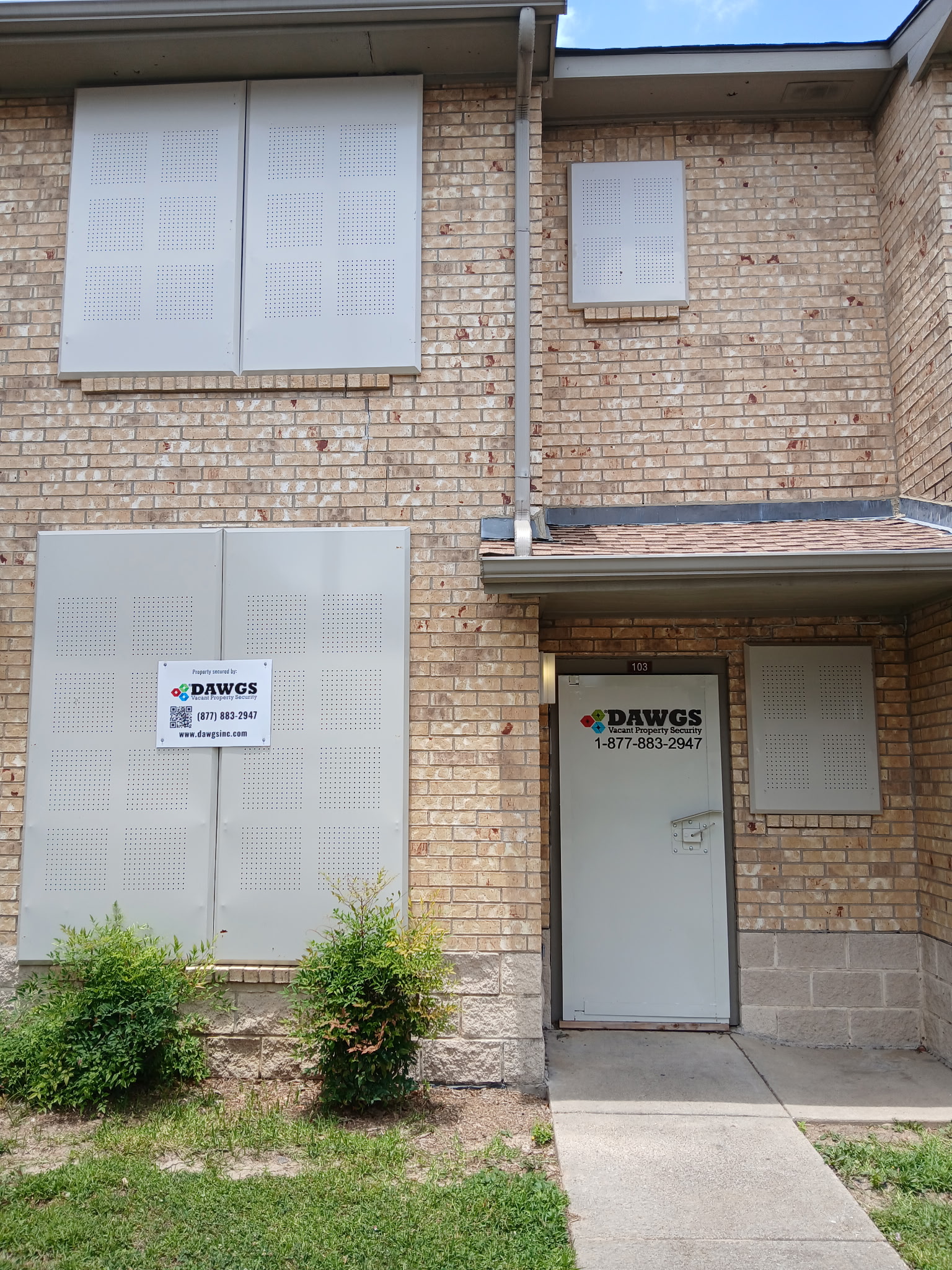
Rental terms can align with uncertain or multi-year project schedules without requiring the authority to purchase, warehouse and redeploy specialised guards. Portfolio pricing and invoicing can be discussed during scoping. Clear change control remains important when a unit status, contractor roster or project sequence changes.
Build the Program Around Evidence
A strong program links each guard to a property record, approved contact and removal milestone. It also communicates what neighbors and residents can expect, especially where work occurs near occupied buildings. DAWGS’ community outreach has included collaboration with housing authorities around Section 3 employment and job fairs.
Coordinate the People and the Property
Coordinate Stakeholders
A pilot or portfolio request works best when eligible properties, required documentation, exceptions and reporting are defined before volume grows. DAWGS can then follow a repeatable framework without ignoring differences at each address.
Coordinate the physical scope with insurance, procurement, legal, safety, construction and community responsibilities that remain outside DAWGS’ role. Clear boundaries help every team understand what the service does and does not cover.
Define the Property Plan
The requester should be able to explain why the property is vacant, what happens next and how long the transition may last. Those answers influence the recommended equipment, access configuration, rental assumption and timing. Where occupied and vacant areas are close together, define the boundary before work — DAWGS solutions are intended for vacant property and must not obstruct an occupied area, required exit or active operation.
Local authorities may require registration, inspections, signs, maintenance or particular securing methods. Verify the rule for the address and include any current order in the assessment. DAWGS does not replace the owner’s compliance review.
Document Access, Installation & Removal
Create a single property record for the request, installation, authorized users, condition checks and removal. When an asset manager, contractor or owner changes, transfer that record and update DAWGS instead of letting access information circulate informally.
Success should be measured with records the organization can verify: complete installations, controlled handoffs, fewer unplanned opening repairs, documented re-entry and timely removal — avoid relying on broad security or community outcomes without evidence. For an urgent request, call with verified authority, occupancy, site hazards, photographs and an on-site contact; DAWGS will triage availability and safe service fit rather than automatically accepting an unrealistic response window.
Discuss the Property or Program
Bring the address or property list, vacancy status, opening and equipment information, access roles, local requirements and target dates. DAWGS will confirm coverage and recommend a practical physical protection scope. For an urgent condition, call 1-877-883-2947; scheduling is confirmed after the request is reviewed.